


Description
-
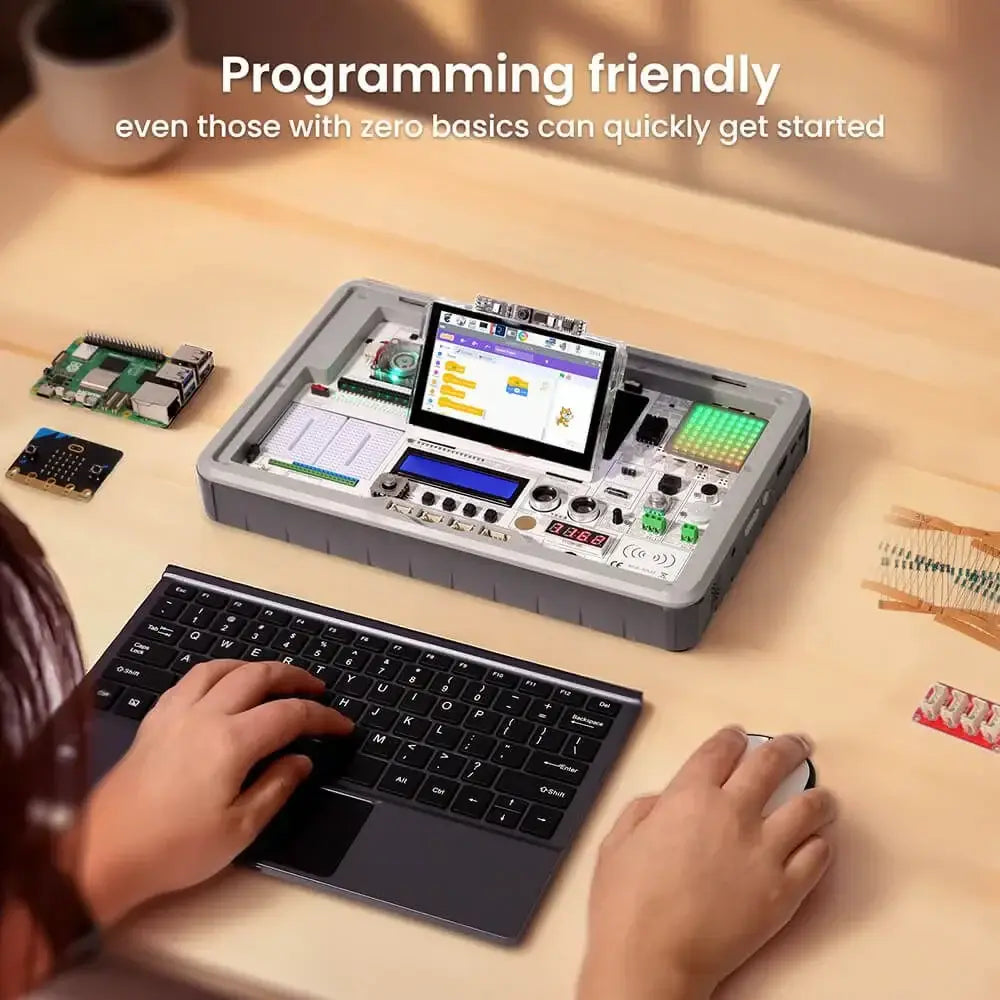
- Students: From elementary school students (8+) to college students, learning the basics of programming and electronic engineering;
- Educators: Teachers and lecturers, for teaching and curriculum development;
- Developers and Engineers: Professional developers and engineers, for project development and prototyping;
- DIY enthusiasts and makers: enthusiasts who like to make projects by themselves;
- Researchers: Researchers engaged in research in fields such as artificial intelligence and machine learning;
- Artists and technical artists: Artists who use technology to create works of art;
- Beginners: Beginners in programming and electronic engineering, looking for a smooth entry path;
- Advanced users: Advanced users who need advanced functions and performance to develop complex projects;
Where is it used?
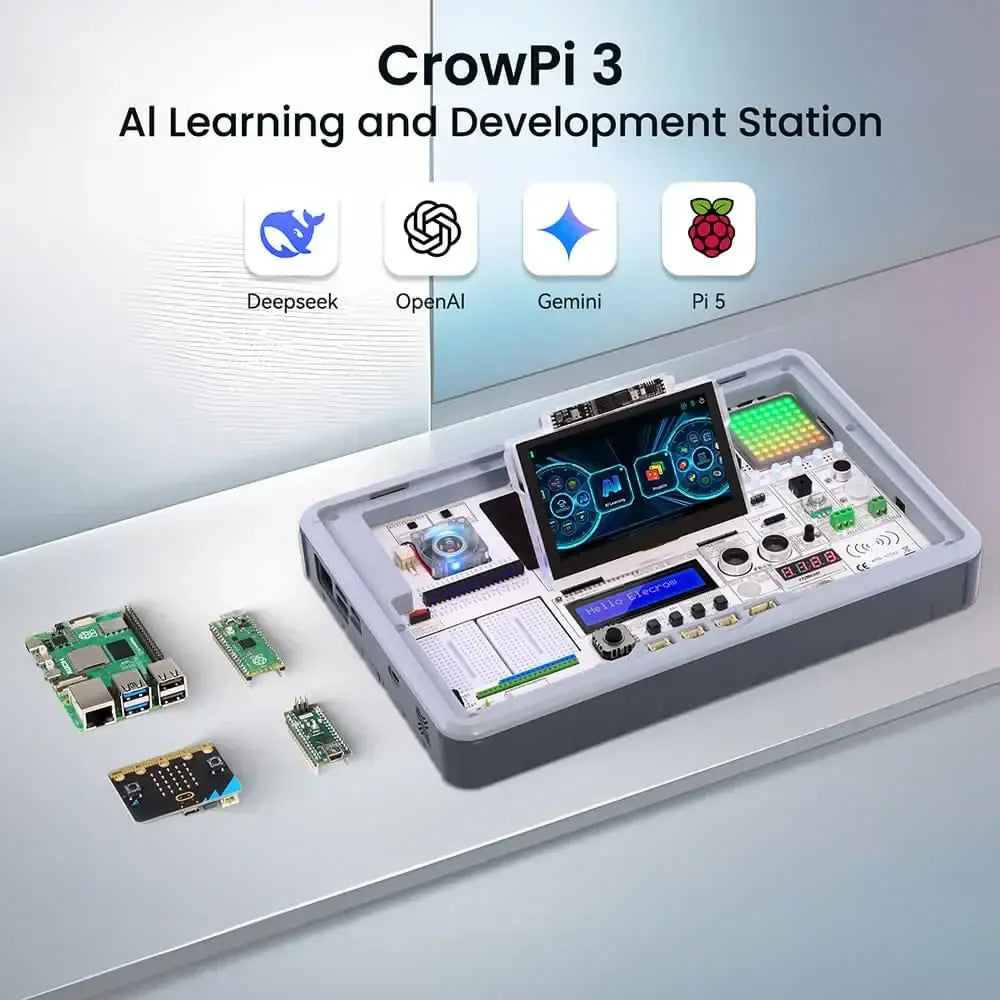
Education and learning/Project development/Research and development/Creative realization/Professional fields/Entertainment and game development
SBC-Raspberry Pi 5
CPU/SoC
Broadcom BCM2712, ARM Cortex-A76, up to 2.4GHz, quad-core, 64-bit
GPU
VideoCore VII GPU @800MHz, supports OpenGL ES 3.1, Vulkan 1.2
(dual micro HDMI ports, supports dual 4K@60fps video output)
RAM
4GB/8GB LPDDR4X-4267 SDRAM
Development
Python, C/C++, Java, Node.js, etc.
Development environments (IDE)
Thonny, Visual Studio Code, etc. (supports Node-RED)
Support frameworks/libraries
TensorFlow, OpenCV, Docker, etc.
Operating systems
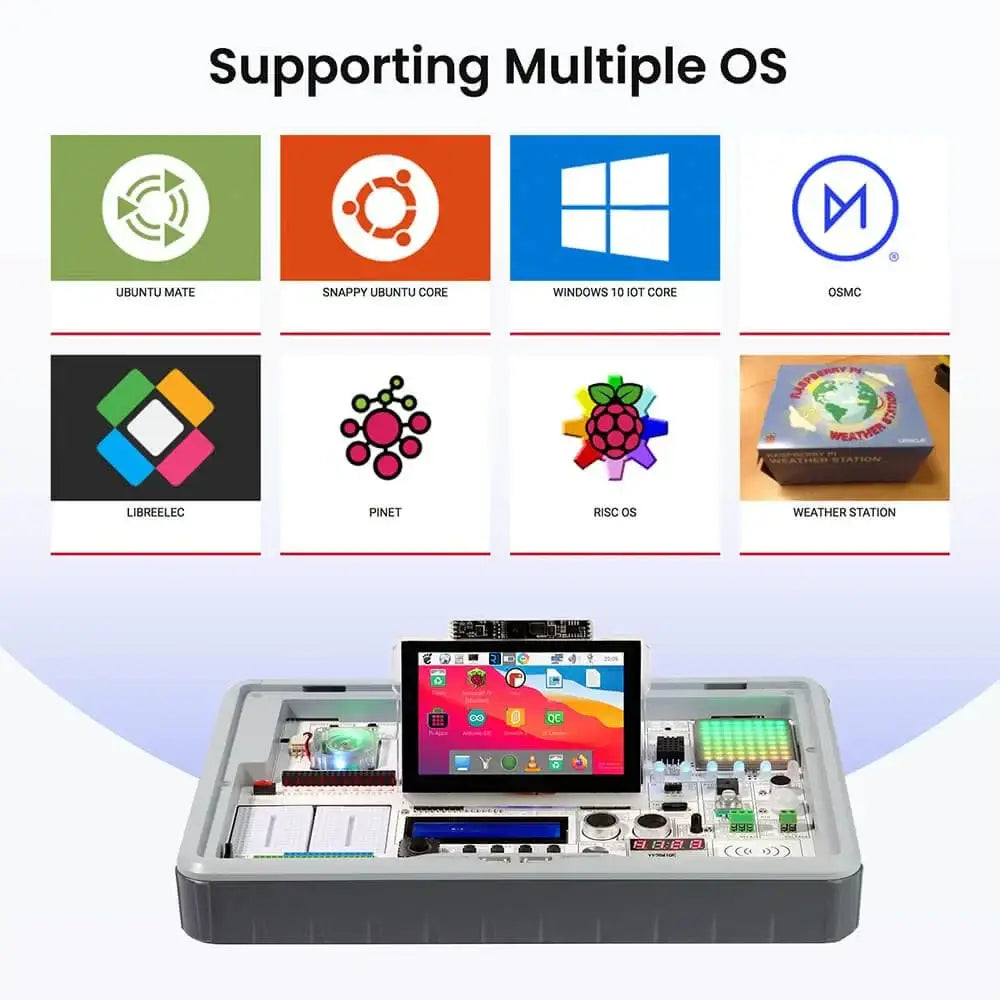
Official: Raspberry Pi OS
Other compatible: Ubuntu Desktop, Manjaro ARM, Kali Linux, LibreELEC (Media Center), OSMC, etc.
Screen
Size
4.3 inch
Resolution
800RGB(H)x480(V)
Active area
95.04(W)×53.858(H) mm
Display panel
IPS wide viewing angle
Brightness
300 cd/m² (Typ.)
Color depth
16.7M
Contrast ratio
1200:1
Backlight
10-LED
Touch type
Full capacitive touch, single point
Wireless Connection
Wi-Fi
Wi-Fi 6 (802.11ax), supports 2.4GHz and 5GHz bands
Bluetooth
Bluetooth 5.2, Bluetooth BLE, supports low-power device connection
Interface (Peripheral)
Type-C (IN/OUT)
For data transmission and DC power supply. The input rated voltage is 5V/5A, the output is 5V/2A, and it supports PD function.
Type-C (OUT)
A USB Type-C interface with output function, used to transmit data to the outside or to power/charge other devices, with an output rated voltage of 5V/2A.
HDMI
This interface is the HDMI interface that comes with Pi 5
Headphone jack
Used to connect headphones or external speakers, output audio signals, 3.5mm.
Ethernet Gigabit
Ethernet interface 10/100/1000 Mbps.
USB 3.0
USB 3.0 port, supports simultaneous 5Gbps operation
USB 2.0
USB 2.0 specification port
DEBUG
DEBUG interface is used for debugging of microcontroller modules, allows users to connect devices such as debuggers or logic analyzers.
Button
Power button/(Power)
Press and hold the power button for 1 second to turn the device on, and press and hold the power button for 3 seconds to turn the device off.
Volume/Brightness button
Used to adjust the volume and screen brightness of the device.
LED Indicator Light
PWR
Power indicator light, lights up red after the device is turned on.
CHG
Lithium battery status indicator, flashes red when low voltage, lights up red when charging, lights up green when fully charged.
Sensor(Input)
EEPROM
Gyroscope/Acceleration
Five-way joystick
Button*4
Touch Sensing
RFID sensing
ultrasound
Flame sensor
Relay
Voltage detection
Angle tilt
Encoder
PIR sensor
Sound detection
Infrared receiver
Temperature and humidity
Hall sensor
Light intensity
Camera
Microphone
Sensor(Output)
Vibration motor
Digital tube
Buzzer
LED*6 running lights
8*8 RGB matrix
LCD 1602
Other Interface
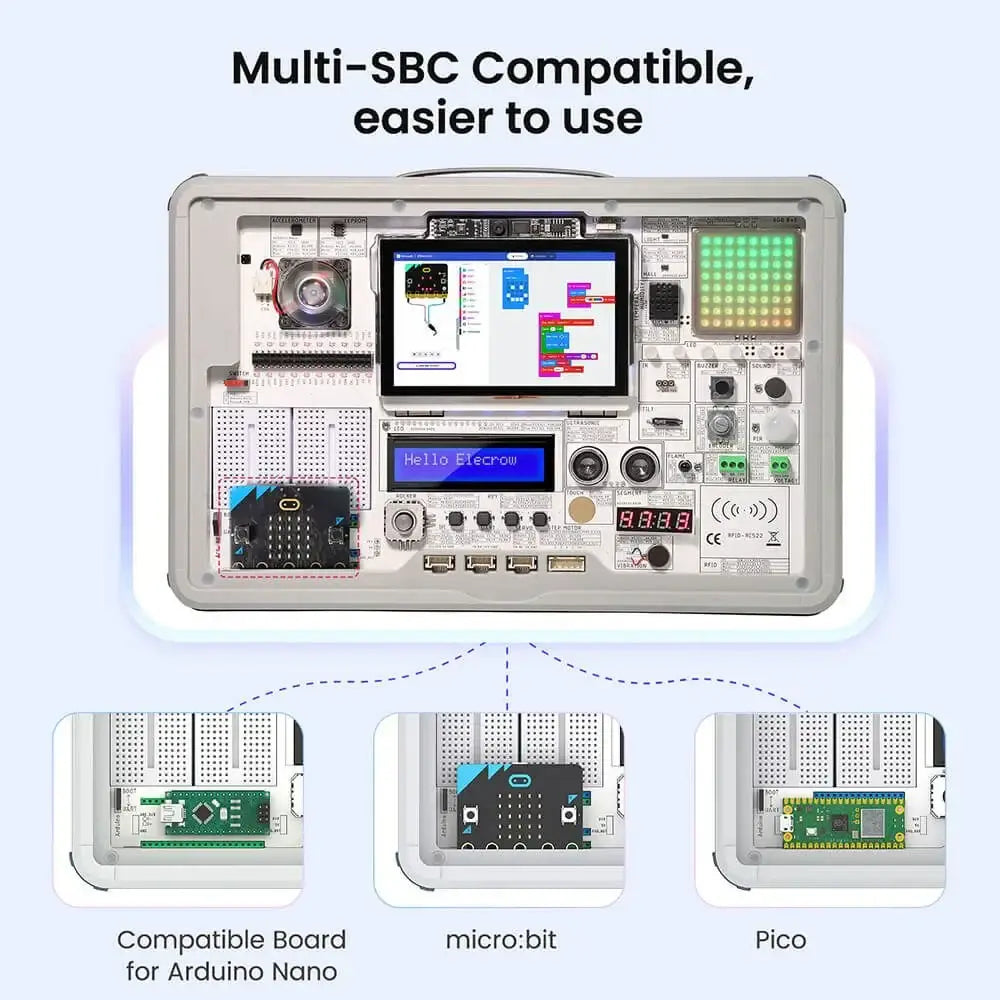
1*40-Pin pin, 1*Ambient Lighting, 2* Breadboard, 1* I2C interface,1* UART interface, 1* Servo interface, 1* Stepper motor interface
Mechanical
Size
285*185*38mm
Shell
ABS+PC
Installation method
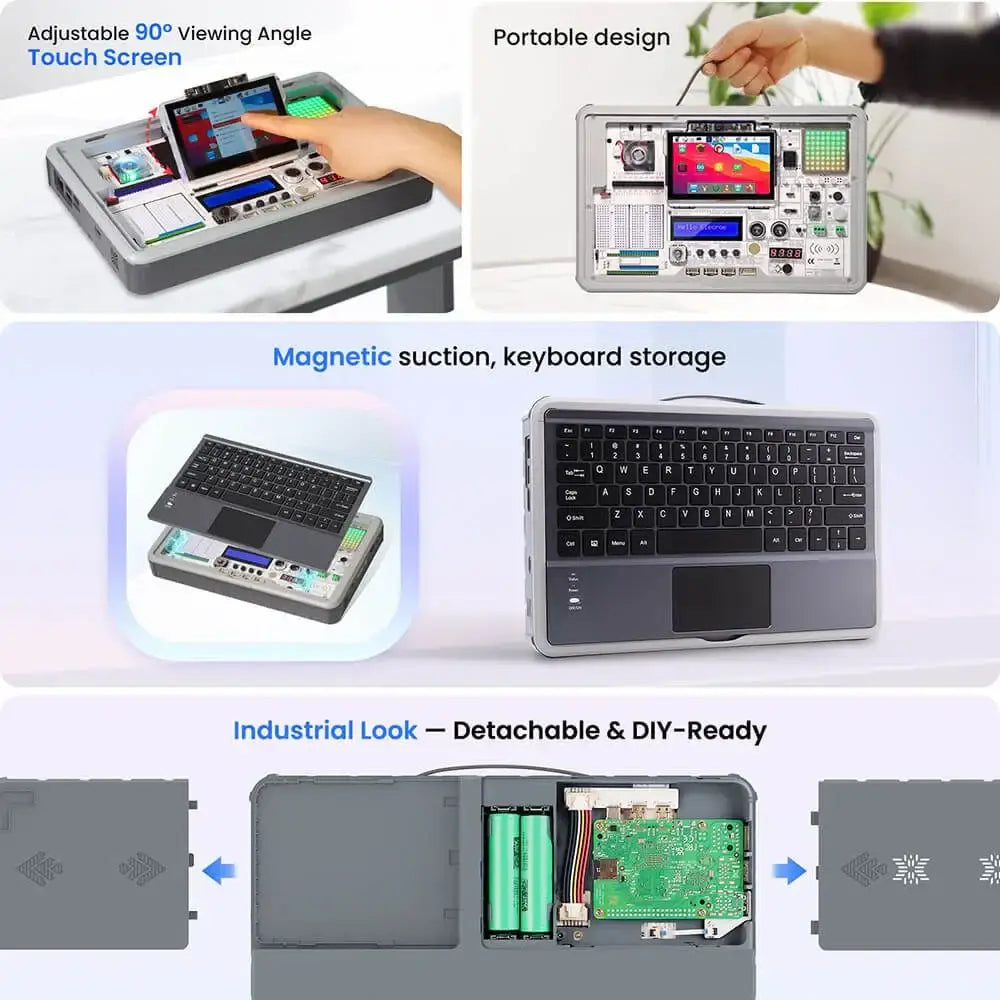
Desktop, portable
Operating temperature
-10~60 ℃
Relative humidity
10%-95%, @ 40°C (non-condensing)
Power Input
5V/5A, with PD protocol
Power Output
5V/2A